Cham sculpture art is the striking visual legacy of the Champa Kingdom, an ancient maritime empire that ruled Central Vietnam for over 1,300 years. These sandstone masterpieces are more than just relics; they are a "divine language" of gods, mythical beasts, and celestial dancers.
This post from Vietpower Travel explores what Cham sculpture art is, the religions that influenced it, and why Cham art is important in Vietnam today.
The story of Cham art begins with a kingdom that commanded the waves. To understand the art, we must understand the people who carved it.
The Cham civilization and history are defined by a collection of independent polities that stretched along the central and southern coast of Vietnam from roughly the 2nd century to the early 1800s. The Cham were primarily masters of the sea, utilizing the rugged coastline to build powerful port cities.
They were renowned throughout Asia as skilled sailors, fierce warriors, and savvy merchants who held a strategic monopoly over the maritime trade routes.
By trading high-value goods like silk and aromatic agarwood, the Champa Kingdom became a vibrant cultural crossroads. They also traded exotic spices and ivory with major powers in India, China, and the Arab world. These connections brought new ideas and artistic styles to the region.
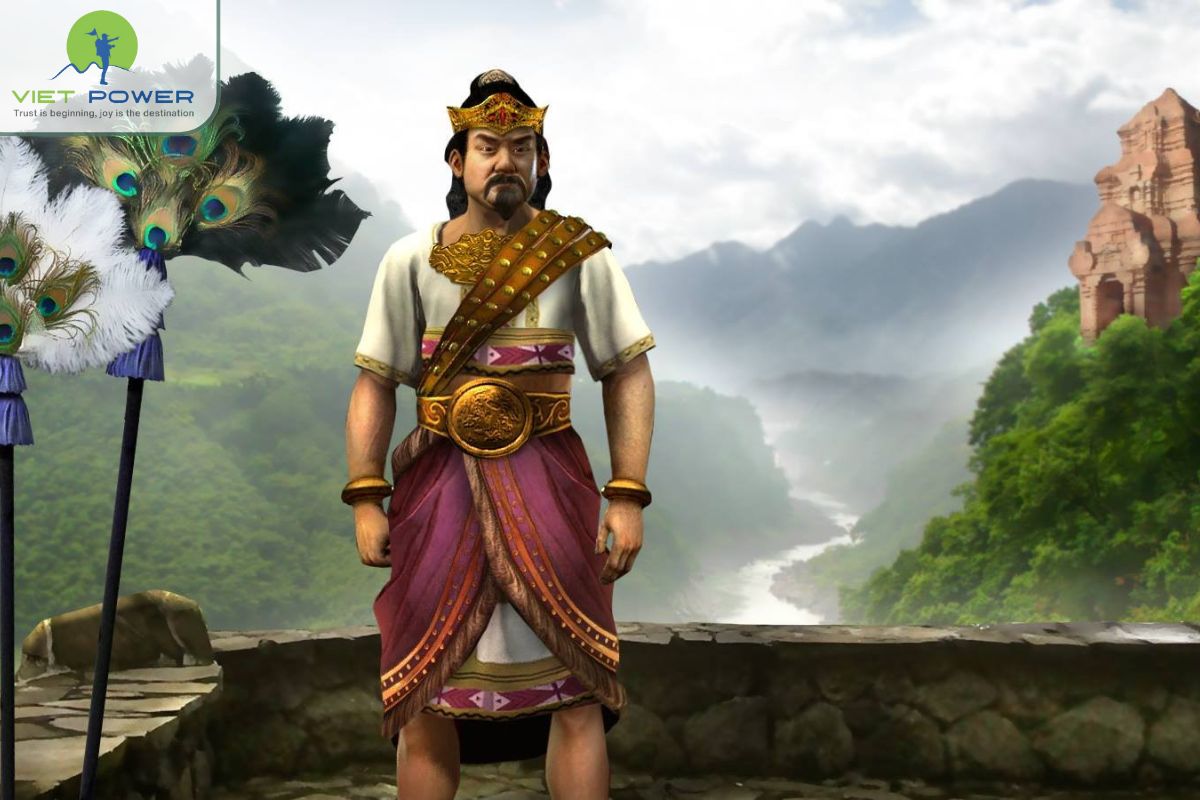
This immense wealth and constant contact with foreign travelers provided the resources and inspiration needed to fund the construction of their magnificent sandstone temples and sophisticated sculptural traditions.
Because of their strategic location, the Cham civilization and history are fundamentally defined by a continuous and vibrant cultural exchange. Positioned directly on the "Maritime Silk Road," the Champa Kingdom served as a vital gateway between the Indian Ocean and the South China Sea.
This prime real estate allowed them to absorb profound Indian philosophies, the sacred Sanskrit script, and complex architectural styles, which they masterfully blended with their own indigenous Austronesian traditions.
.jpg)
This cultural fusion gave birth to a unique aesthetic that stands apart from the more rigid or formal styles found in neighboring regions like the Khmer Empire or Imperial China. Cham sculpture is celebrated for being more sensual, rhythmic, and dynamic, often focusing on the fluid movement of the human body and the "inner breath" of the stone.
By harmonizing foreign religious iconography with local sensibilities, Cham artists created a visual language that felt both internationally sophisticated and deeply rooted in the spirit of the Central Vietnamese coast.
Today, Cham art is important in Vietnam. It represents the "Indo-Pacific" side of the nation's history, acting as a bridge between mainland Southeast Asia and the maritime world of the Indian Ocean.
It serves as a powerful reminder that Vietnam is a diverse tapestry of cultures, languages, and belief systems that have coexisted for millennia. These sculptures provide vital archaeological evidence of a sophisticated society that once held its own against the great empires of Asia.
The preservation of these sandstone works is much more than a museum project. It is a tribute to a civilization that contributed significantly to the architectural and spiritual landscape of the country.
.jpg)
By protecting the Cham towers and temple ruins, Vietnam honors a legacy of master craftsmanship and religious tolerance. For modern scholars and visitors, these relics are essential for understanding the full scope of Vietnamese identity, proving that the country’s strength lies in its ability to embrace and preserve its multifaceted ancient roots.
Explore more posts within this topic and uncover even more of what makes Vietnam’s culture so captivating. Head to our Vietnam culture category for insights, stories, and cultural highlights across the country.
Religion was the primary engine behind all artistic production in Champa. If you ask what religions influenced Cham sculptures, you find a fascinating dance between two great Indian traditions.
For most of their history, the Cham kings were devoted followers of Shiva, the Hindu God of Destruction and Regeneration. This Hindu influence in Cham art is visible everywhere. Shiva is rarely shown as a simple man; he is depicted as a cosmic force.
Terms explanation:
.jpg)
In the 9th century, particularly under King Indravarman II, the kingdom shifted toward Mahayana Buddhism. This era gave birth to the “Đồng Dương style”, which is perhaps the most original and striking in all of Southeast Asia.
Explaining religious terms:
.jpg)
It is important to remember that these statues were not "art" in the modern sense of being purely decorative objects for a gallery. Within the context of the Champa Kingdom, they functioned as "supports for meditation" and essential tools for spiritual liberation.
According to ancient belief, a statue of a god was not merely a representation; it was a physical vessel, or a "body," that could be inhabited by the deity's actual spirit through sacred consecration.
.jpg)
When a priest performed a ritual or anointment, the stone was believed to literally become the god, bridging the gap between the earthly and divine realms. This sacred function is exactly why the technical details are so incredibly precise.
Every element - from the specific hand gestures (mudras) that signal protection or teaching, to the symbolic items held in the hands like a lotus flower, a trident, or a scripture - had to be perfect.
Even a small mistake in the carving could disrupt the spiritual connection, so the artists worked with a sense of religious duty, ensuring that every curve of the sandstone was worthy of hosting a divine presence.
You can find more posts related to this topic in the category below:
The Champa were not just dreamers; they were elite engineers. Their stone sculpture techniques allowed them to overcome the challenges of a tropical climate to create lasting monuments.
While the towering Cham towers and temple ruins were constructed primarily from specialized fired bricks, the intricate masterpieces of Cham art were almost exclusively crafted from sandstone. This stone was strategically quarried from local mountain ranges, most notably the "Marble Mountains" near Da Nang and the rugged Duy Xuyen district in Quang Nam province.
The choice of sandstone was a stroke of engineering genius: the stone possesses a unique geological property where it remains relatively "soft" and workable when first extracted from the earth.
This allowed master carvers to execute high-precision stone sculpture techniques, creating incredibly fine details such as delicate jewelry, complex hair braids, and even the subtle textures of royal silk garments.
However, the true magic of the material lies in its aging process; once the stone is exposed to the air and the elements, a natural chemical reaction occurs that causes it to harden significantly over time.
.jpg)
This transformative quality made the sculptures exceptionally durable, allowing them to withstand the intense humidity, heavy tropical monsoons, and extreme heat of the Vietnamese climate for over a thousand years.
Without this specific mastery of local materials, much of the Champa’s spiritual and artistic history would have been lost to erosion centuries ago.
Cham artists specialized in two main styles: high relief and freestanding statues.
.jpg)
A unique feature of Cham towers and temple ruins is that the sculptures were often designed as "architectural jewelry."
Explaining the terms:
.jpg)
To truly appreciate the scale of these stone blocks, you must walk through the sanctuary of My Son. Vietpower Travel offers specialized history tours that explain how these massive stones were lifted into place without modern machinery.
Turn your dream of discovering Vietnam into reality with a personalized tour crafted by Vietpower Travel.
Every curve and creature in Cham art carries a hidden message. By studying deities and symbolic motifs, we can read the myths of the Champa like an open book.
Perhaps the most beloved icons are the Apsaras. In the Trà Kiệu style (10th century), these celestial dancers are shown with soft, flowing bodies. They feature "the Cham smile" - a look of eternal, peaceful joy.
They represent the beauty of the heavenly realm. Accompanying them are Gandharvas, the musicians of the gods, often shown playing flutes or drums. Together, they symbolize the harmony and joy of the spiritual world.
To better understand these figures
.jpg)
The Cham believed that temples needed spiritual protection. They carved a variety of "vahanas" (mounts of the gods) and mythical hybrids:
.jpg)
If you look closely at the borders of the statues, you will see complex patterns.
To explain these terms, Foliage refers to a decoration based on the leaves and stems of plants. The Tháp Mẫm style is a specific period of Cham art (12th-13th century) known for being more elaborate, powerful, and mysterious than earlier styles.
.jpg)
Discover more posts on the same topic to deepen your understanding of Vietnam’s culture:
While many temples were destroyed during the wars of the 20th century, the best examples of this art have been gathered into museums and protected sites.
Founded by French scholars in 1915, the Cham Sculpture Museum in Da Nang is the world’s premier destination for understanding this civilization. It houses the most comprehensive collection of sandstone artifacts in existence, acting as a "living library" of a lost empire.
.jpg)
The museum is cleverly organized into geographic galleries based on the specific Cham towers and temple ruins where the pieces were discovered, such as the My Son Room, the Tra Kieu Room, and the Dong Duong Room.
Location: 2, 2/9 Street, Hai Chau District, Da Nang
.jpg)
Located in a lush, emerald valley about 40km from Da Nang, the My Son Sanctuary is the most significant archaeological site of the Champa Kingdom and a UNESCO World Heritage site. For centuries, this was the religious heart of the empire, where kings were buried and national rituals were performed.
While time and past conflicts have left many towers in ruins, seeing the carvings on site is a transformative experience. This means the carvings remain in their original place. The forest shadows and moss-covered stones create a hauntingly beautiful atmosphere. It is a spiritual feeling that a modern museum simply cannot replicate.
It allows you to see exactly how the stone sculpture techniques were designed to catch the natural sunlight and harmonize with the surrounding mountains.
Opening hours & Ticket price
Opening Hours
Ticket Prices (Approximate)
.jpg)
If you travel further south to Nha Trang or Phan Rang, you will encounter the "living" side of Cham civilization and history. Unlike the ruins of My Son, these towers are still active centers of worship for the modern Cham community.
.jpg)
Cham sculpture art is more than just ancient history; it is a testament to the creativity, resilience, and spiritual depth of the Champa people. From the Hindu influences that brought the gods to life to the masterful stone sculpture techniques that preserved them, this art form remains one of the most significant cultural achievements in Southeast Asian history.
By visiting these sites and museums, you aren't just looking at stone - you are connecting with a thousand-year-old tradition of beauty and faith.
Ready to explore the "Lost Kingdom" of Central Vietnam? Let Vietpower Travel be your guide! We provide expert-led tours to the Cham Sculpture Museum and the My Son Sanctuary, ensuring you don't miss a single detail of this incredible artistic legacy. Book your journey today and walk among the gods of the Champa!
Please kindly send us your ideas about the tours: destinations, attractions, your group, hotel class... we will get back to you with details & best offers quickly. Surely, you will feel satisfactory!
 |
 |
 |
 |
 |
 |

.jpg) Customize Your Trip
Customize Your Trip
 Vietnam Tours
 Thailand Tours
 Laos Tours
 Indonesia Tours
 Cambodia Tours
 Myanmar Tours