Tra Su Cajuput Forest is one of the most remarkable natural landscapes in southern Vietnam. Located in the heart of the Mekong Delta, this vast flooded forest offers visitors a rare chance to explore wetlands filled with wildlife, migratory birds, and peaceful waterways. Travelers who want to experience authentic nature in Vietnam often consider Tra Su Cajuput Forest a must-visit destination.
Let Vietpower Travel helps visitors discover Tra Su Cajuput Forest in a comfortable and meaningful way while learning about the wetlands of the Mekong Delta.
Tra Su Cajuput Forest is a famous wetland reserve in southern Vietnam. The area has become a major ecotourism destination in the Mekong Delta. Visitors come here to experience peaceful boat journeys, observe birds, and enjoy the green landscapes that change with the seasons.
Tra Su covers more than 800 hectares of protected forest. It is located in Tinh Bien District of An Giang Province, about 30 kilometers from Chau Doc City and close to the Vietnam–Cambodia border. The forest is famous for its flooded melaleuca ecosystem and its rich biodiversity.
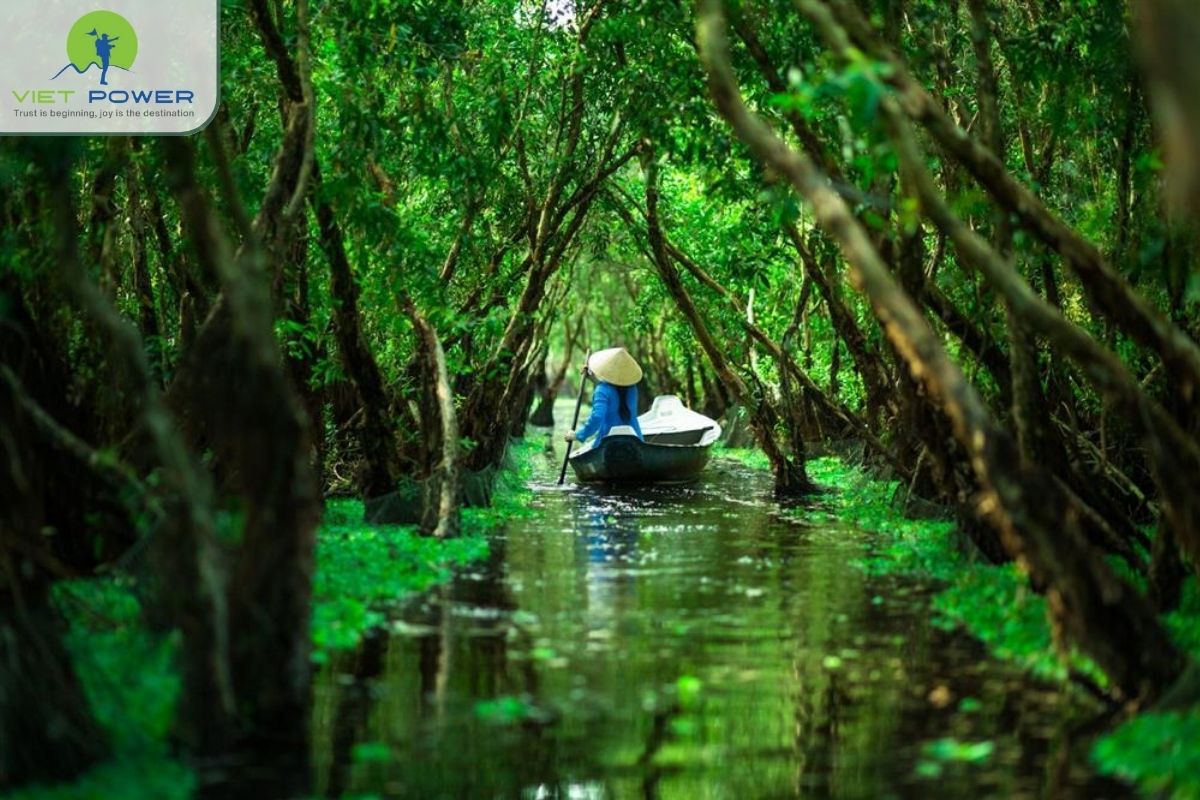
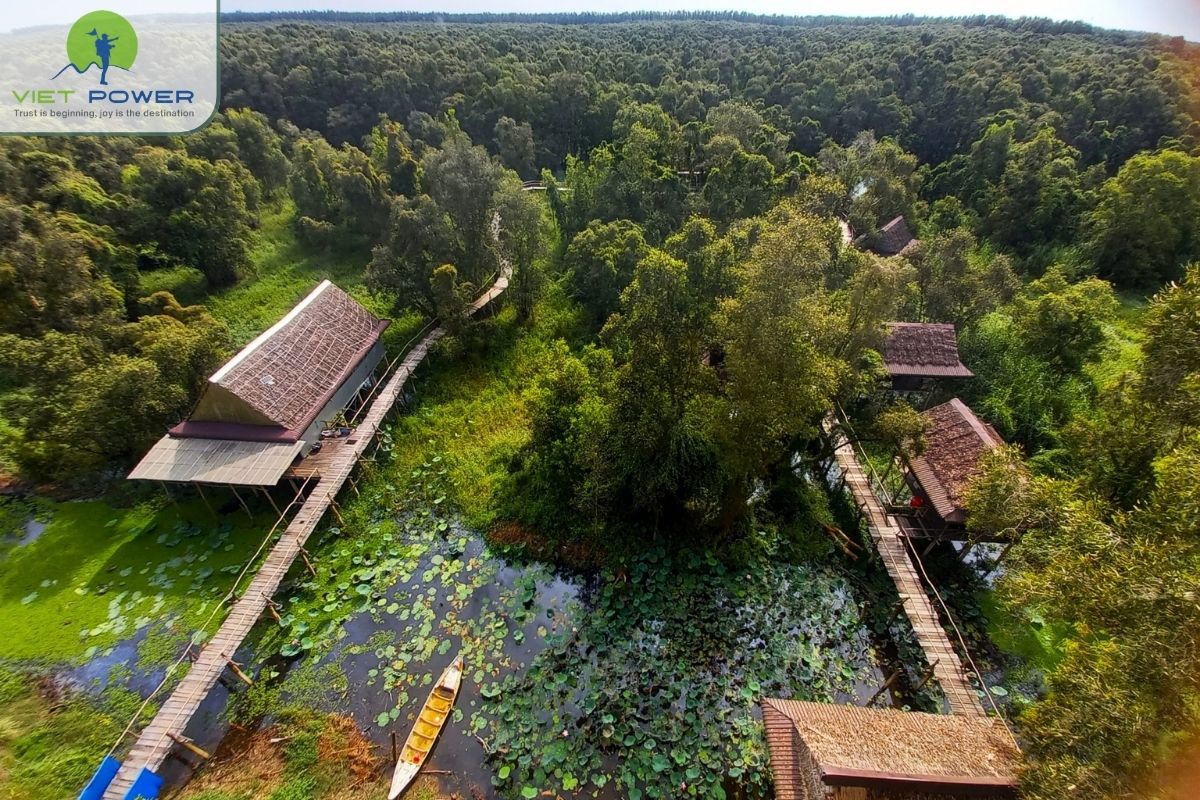
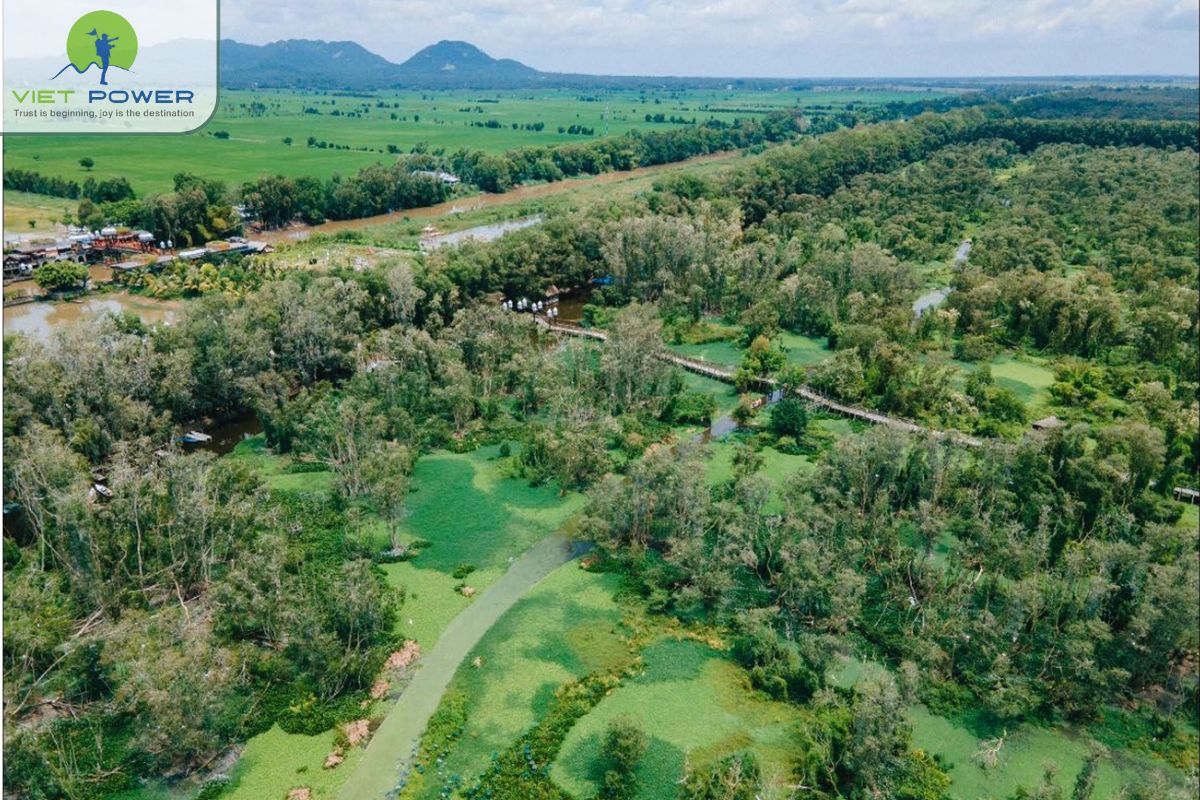
The landscape consists mainly of dense melaleuca trees growing in shallow water. Canals run through the forest, forming natural pathways for boats.
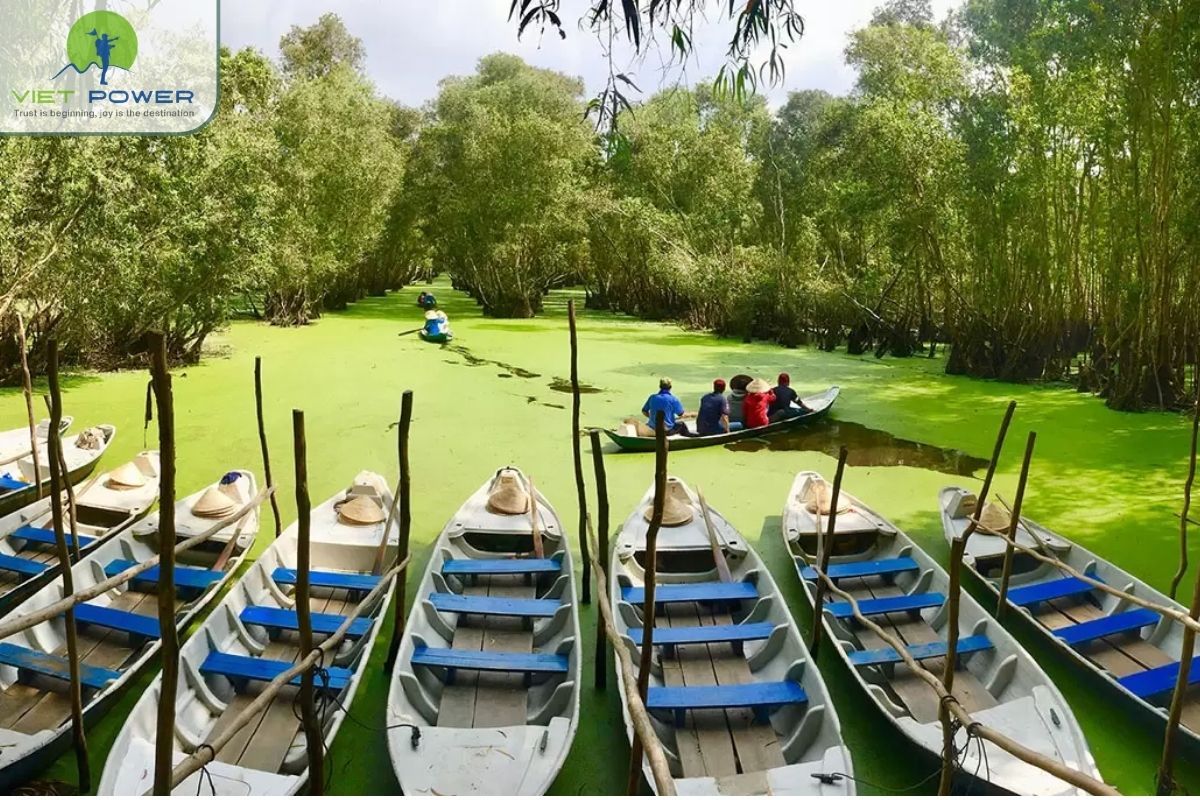
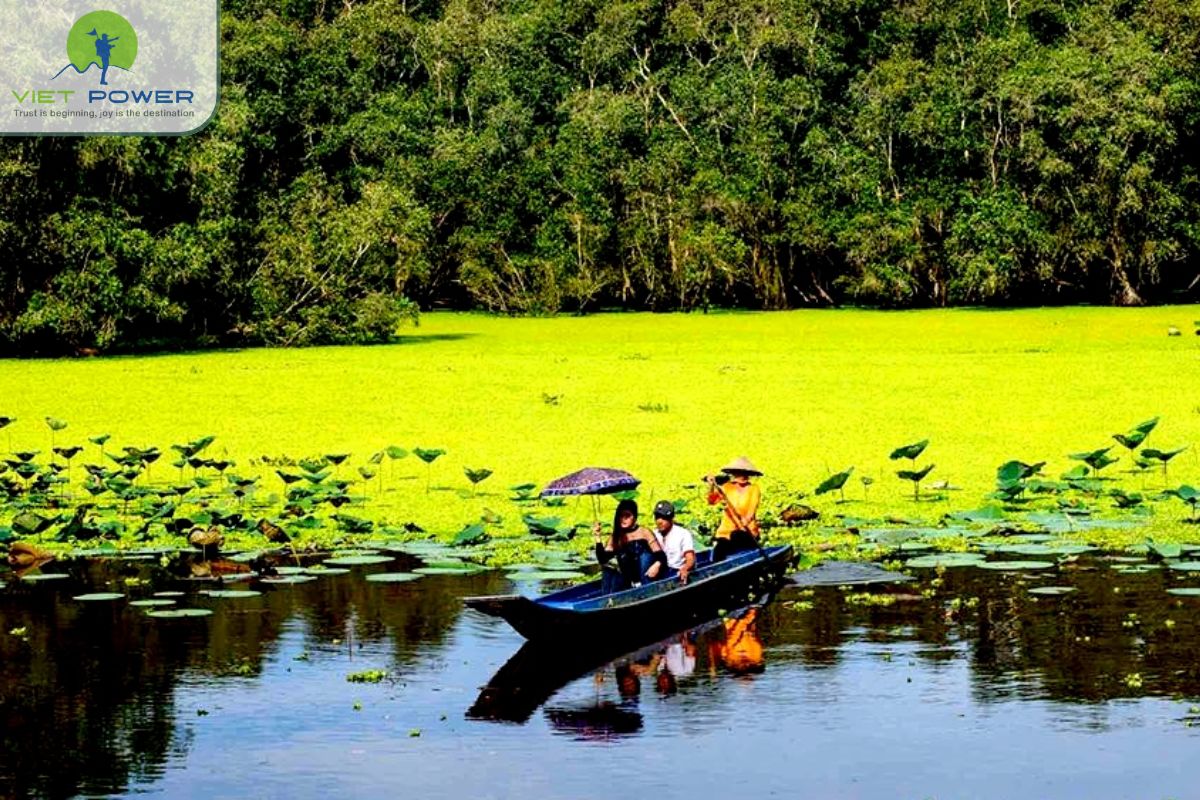
One of the most striking features is the floating vegetation covering the water surface. Plants such as duckweed create a bright green layer that stretches across the canals. When boats pass through, they leave trails in the green carpet, creating a magical view.
The scenery feels very different from other Mekong Delta destinations. Instead of busy rivers and floating markets, Tra Su offers quiet wetlands and untouched nature.
Tra Su plays an important role in the ecology of the Mekong Delta. The flooded forest helps regulate water levels during the annual flood season. It also provides shelter for many plant and animal species.
Scientists have identified more than 140 plant species in the area. In addition, the wetlands support fish, reptiles, and amphibians that depend on the seasonal water cycle.
Because of these ecological values, Tra Su is considered one of the most important wetland conservation areas in southern Vietnam.
Explore more posts within this topic and uncover even more of what makes Vietnam such a captivating destination. Head to our Vietnam tourist attractions category for travel insights, guides, and must-visit spots across the country.
Many wetlands exist across Southeast Asia. However, Tra Su stands out for several reasons that make it a unique destination.
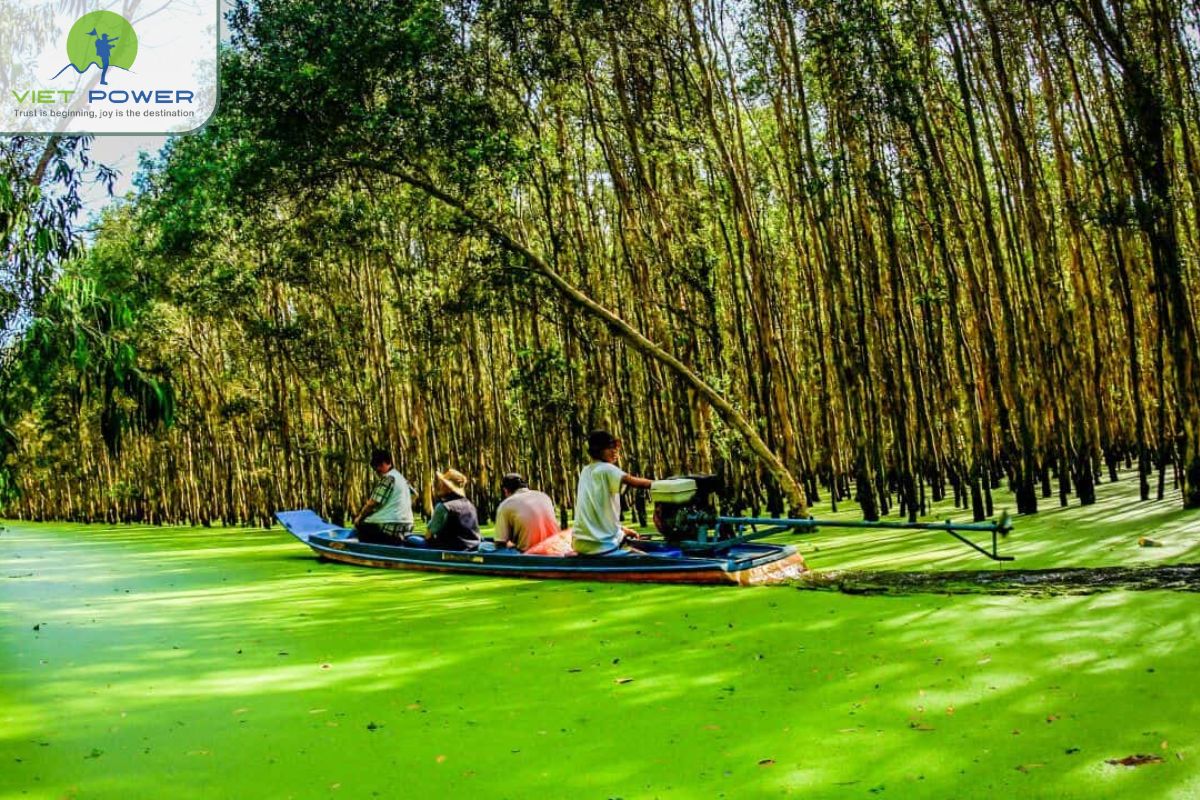
One of the most distinctive features of Tra Su Cajuput Forest is its flooded melaleuca ecosystem. Melaleuca trees, also called cajuput trees, naturally grow in swampy areas. Their roots adapt well to wet soil and seasonal flooding. Because of this ability, the trees thrive in environments where many other plants cannot survive.
Every year, the Mekong Delta enters the rainy and flood season. During this time, water gradually rises and spreads across the forest. Instead of damaging the trees, the flooding helps maintain the ecosystem. The water carries natural nutrients into the soil and canals. These nutrients support plant growth and sustain aquatic life such as fish and small organisms.
As a result, the forest remains green and vibrant throughout much of the year.
Another remarkable feature of Tra Su Cajuput Forest is the seasonal floating vegetation that covers the waterways. During the flood season, small aquatic plants grow rapidly across the canals and ponds. Duckweed is the most common species. It spreads across the water surface and forms a bright green layer.
This floating vegetation transforms the scenery of the forest. Instead of dark water, visitors see long canals covered with a natural green carpet. When boats move slowly through these waterways, they gently push the plants aside. The boats then leave curved trails across the water. These patterns create beautiful shapes that many photographers love to capture.
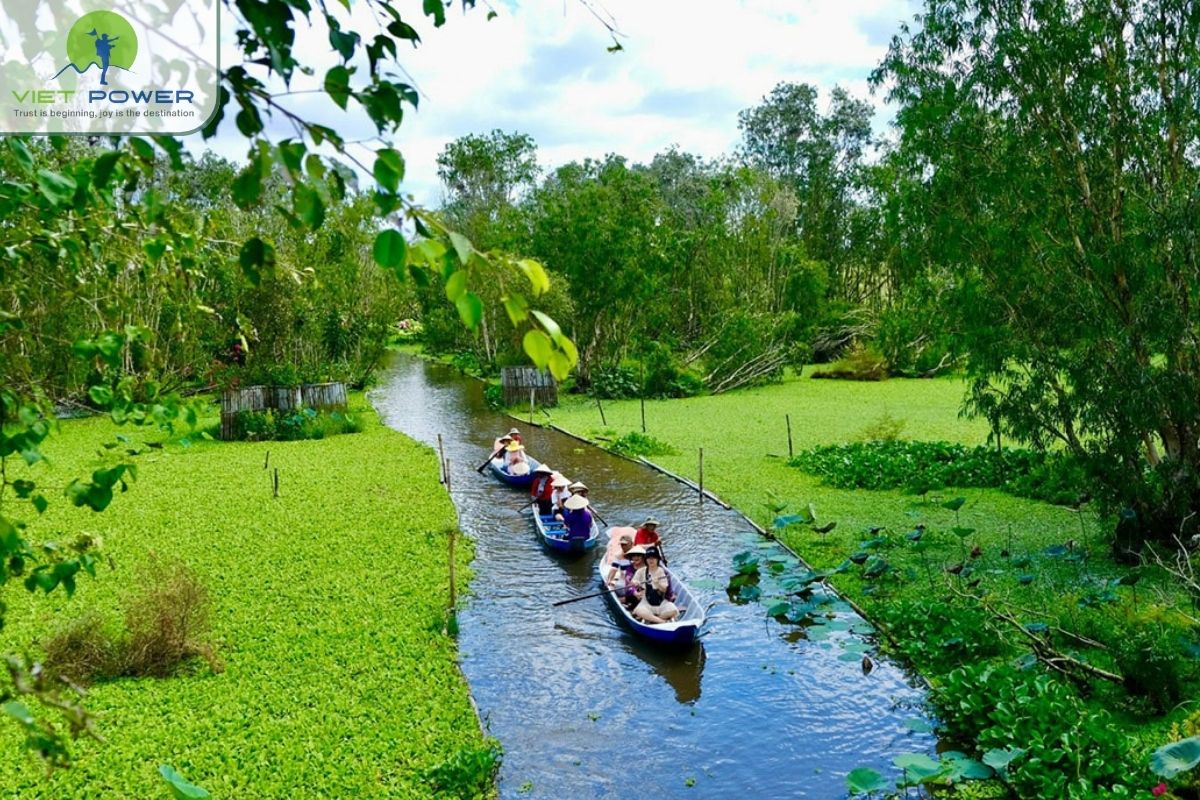
In addition, the floating plants play an important ecological role. They provide food for small aquatic animals and help maintain water quality in the wetlands. Because of this natural balance, Tra Su Cajuput Forest supports a rich habitat for birds, fish, and other wildlife.
This natural phenomenon is one reason why the forest attracts photographers and nature lovers from around the world.
Discover more posts on the same topic to deepen your appreciation of Vietnam’s nature:
Tra Su is not only beautiful but also biologically rich. The forest functions as an important habitat for many species in the Mekong Delta wetlands.
One of the most remarkable features of Tra Su Cajuput Forest is its role as a sanctuary for migratory birds. The wetlands provide abundant food, clean water, and sheltered nesting areas. Because of these conditions, many birds choose the forest as a seasonal home.
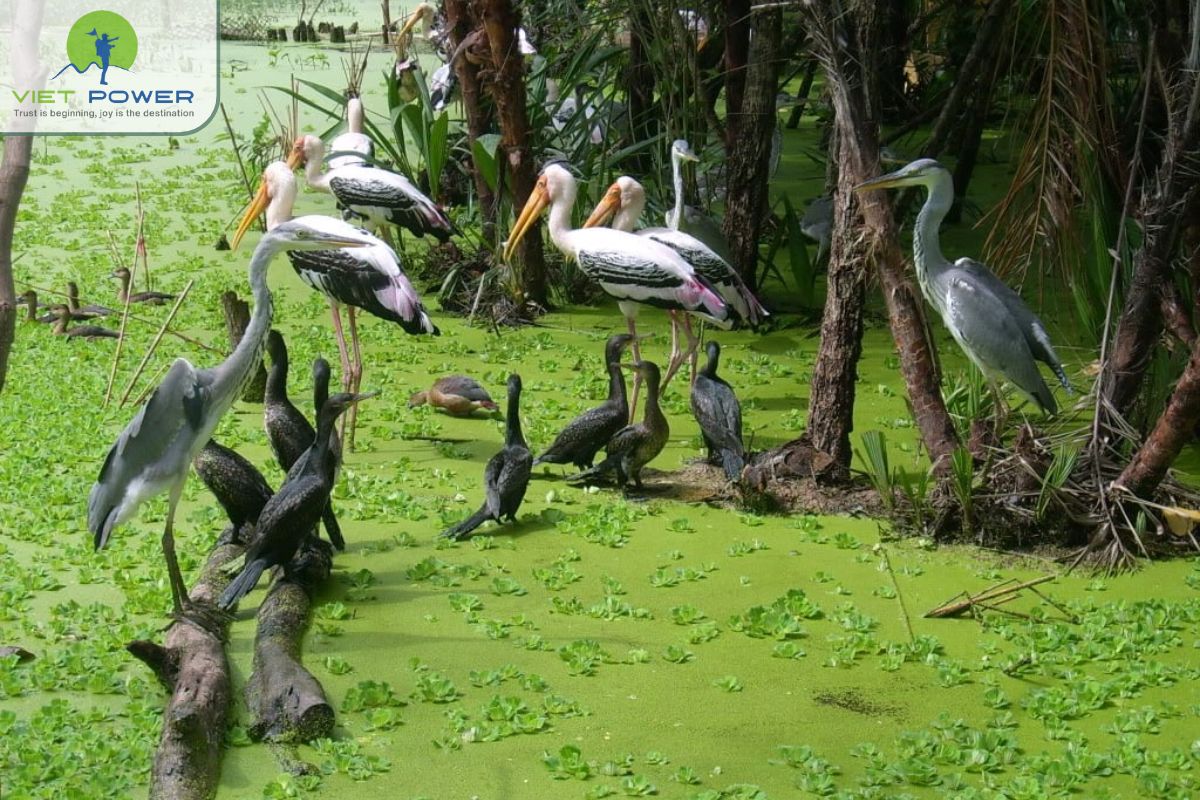
Scientists have recorded around 70 bird species living in the forest. Some birds stay throughout the year. Others migrate to the area during certain seasons, especially when water levels rise in the Mekong Delta. The flooded environment attracts birds that depend on wetlands for food.
Visitors commonly spot several waterbird species while exploring the forest. These include storks, egrets, herons, bitterns, and cormorants. Many of these birds live in large colonies high in the melaleuca trees. When visitors travel quietly by boat, they can often watch birds resting, feeding, or flying between branches.
For birdwatchers, Tra Su Cajuput Forest offers a rare chance to observe wetland birds in their natural habitat. The peaceful setting and abundant wildlife make the forest one of the best birdwatching locations in southern Vietnam.
Besides birds, Tra Su Cajuput Forest supports many other forms of wildlife. The flooded canals and wetlands provide ideal living conditions for aquatic animals. Fish and shrimp thrive in the nutrient-rich water that flows into the forest during the flood season.
These aquatic species form an important part of the wetland ecosystem. They serve as a food source for birds and other animals. At the same time, they help maintain the natural balance of the environment.
The forest also shelters several reptiles and amphibians. Frogs, snakes, and small lizards live among the trees and waterways. These animals play a key role in controlling insect populations and supporting the ecological system.
Because of its rich biodiversity, the forest has become an important area for ecological conservation. Researchers and conservationists study the ecosystem to better understand wetland environments in the Mekong Delta. Meanwhile, visitors can appreciate the natural beauty and wildlife that make Tra Su Cajuput Forest such a unique destination.
Turn your dream of discovering Vietnam into reality with a personalized tour crafted by Vietpower Travel.
One of the highlights of visiting Tra Su Cajuput Forest is traveling through the wetlands by boat. This experience allows visitors to explore areas that cannot be reached on foot.
Most tours begin with a motorboat ride along larger canals. These boats carry visitors deeper into the forest while providing a comfortable view of the surroundings.
After reaching smaller waterways, visitors transfer to traditional bamboo boats. Local rowers guide the boats slowly through narrow channels lined with melaleuca trees.
Because the boats move quietly, travelers can observe birds and wildlife without disturbing them.
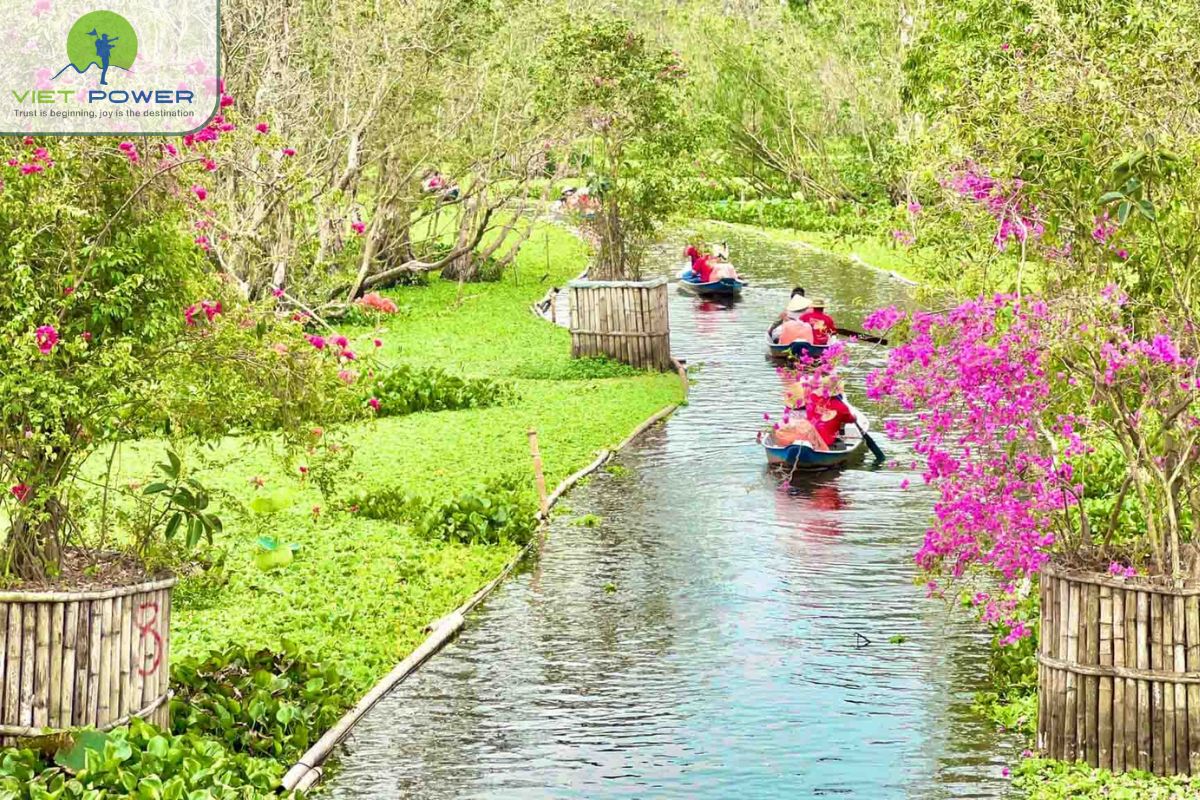
The bamboo boat ride creates a peaceful and immersive experience. Visitors glide under dense green canopies while floating plants drift across the water.
Sunlight filters through the trees and reflects on the canals, creating beautiful natural lighting. The calm atmosphere allows visitors to fully appreciate the beauty of the wetlands.
For many travelers, this quiet journey becomes the most memorable part of the visit.
You can find more posts related to this topic in the category below:
Good habits help you enjoy your trip, even in challenging weather.
Choosing the right season can greatly enhance the experience of visiting the forest.
Flood Season: The best time to visit Tra Su Cajuput Forest is during the Mekong Delta flood season, usually from September to November. During this period, water levels rise and the forest becomes fully flooded. Boats can travel deeper into the wetlands, allowing visitors to see more wildlife and vegetation. The floating green plants also appear at their most vibrant during this time.
Best Time of Day for Wildlife Viewing: Early morning and late afternoon offer the best opportunities for wildlife observation. Birds are most active around sunrise as they leave their nests to search for food. In the late afternoon, they return to the forest in large groups. These hours also provide softer light, which is ideal for photography.
Tra Su Cajuput Forest offers several activities for visitors who enjoy nature and outdoor exploration.
Ideal Location for Photography: The forest provides many stunning photographic opportunities. The combination of green vegetation, waterways, and wildlife creates dramatic scenery.
Photographers often capture images of:
The observation tower in the forest allows visitors to see the entire landscape from above. From this vantage point, the vast wetlands stretch toward the horizon.
Birdwatching and Nature Walks: Birdwatching is another popular activity in Tra Su. Visitors can observe many species from boats or designated viewing areas. In addition, the long bamboo walking bridge allows travelers to explore parts of the forest on foot. This pathway winds through the trees and offers close views of the natural environment.
Together, these activities make Tra Su a perfect destination for eco-travel in Vietnam.
Preparing properly can help visitors enjoy their trip more comfortably.
What should visitors bring when visiting Tra Su Cajuput Forest? Because Tra Su is a wetland area, travelers should bring a few essential items. Recommended items include:
Photography enthusiasts should also bring a camera or binoculars for wildlife viewing.
Suggested Routine for a Visit: A typical visit to Tra Su Cajuput Forest lasts half a day. Many travelers follow a simple routine:
First, arrive in the morning when the forest is quiet. Then take a motorboat ride into the wetlands. After that, transfer to a bamboo boat for a deeper exploration of the canals.
Later, visitors can walk along the bamboo bridge and climb the observation tower for panoramic views. Finally, many people stay until sunset to watch birds returning to the forest.
Tra Su Cajuput Forest offers one of the most unique nature experiences in the Mekong Delta. Its flooded melaleuca ecosystem, rich wildlife, and peaceful waterways create a landscape unlike anywhere else in Vietnam.
Contact Vietpower Travel today and start your Mekong Delta journey to discover the peaceful wetlands of Tra Su Cajuput Forest.
Please kindly send us your ideas about the tours: destinations, attractions, your group, hotel class... we will get back to you with details & best offers quickly. Surely, you will feel satisfactory!
 |
 |
 |
 |
 |
 |

.jpg) Customize Your Trip
Customize Your Trip
 Vietnam Tours
 Thailand Tours
 Laos Tours
 Indonesia Tours
 Cambodia Tours
 Myanmar Tours